Welcome to the 2026 Legislative Session. This weekly brief is a UTIA-member benefit. If there is interest in receiving this tracker please refer to becoming a member byclicking here.
February 9, 2026
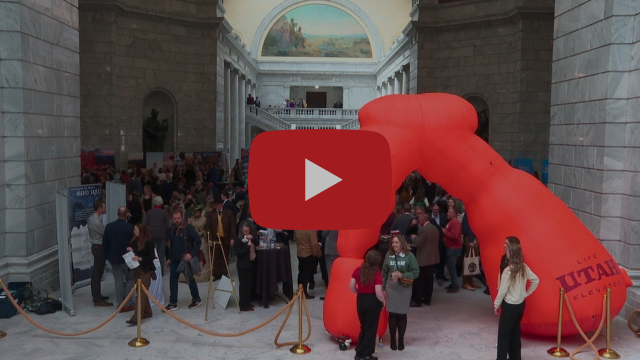
Tourism Day on The Hill, held Friday, February 6th, was a huge success! Hundreds of tourism partners from around the state gathered in the Capitol Rotunda to exhibit and visit with their legislators over lunch.
A highlight for many attendees was the opportunity to be in the House and Senate galleries as Representative Brooks and Senator Vickers each took a personal privilege to recognize the tourism industry’s impacts of $13.3 billion in direct visitor spending, generating $2.5 billion in state and local tax revenue.
If you weren’t able to attend in person, you should watch the personal privileges here:
Thank you to all of our partners who took the time to join us on the Hill and engage with elected officials on behalf of our industry. Digital versions of the resources and presentations from Tourism Day on the Hill are available in our public access folder here.
This RFA would extend the Rural Film Incentive Program funding to $12 million annually.
WHY THIS MATTERS:
Since FY 2022, legislative authorization of $12 million per year has resulted in measurable economic impact, increasing rural filming days from 98 in 2021 to an average of 279 days annually, with average project spending up to 180 percent. Productions now spend approximately $100,000 to $250,000 per day in rural counties, bringing in direct local economic activity and supporting workforce growth aligned with higher education pathways. Continued funding will allow the state to retain and attract projects that highlight rural Utah while helping these communities diversify their economies as part of Utah's creative sector.
📣 TAKE ACTION:
Rural industry partners should encourage their House members to extend funding for the Rural Film Incentive Program to $12 million annually through the Request for Appropriation (RFA), ensuring stable, ongoing support for film and television production in Utah’s rural communities.
Limits what juries can hear about insurance and paid medical bills. In most tort lawsuits, juries would no longer see evidence that a plaintiff’s medical bills were paid, discounted or written off by insurance or public programs. Damages would be considered without reference to those collateral payments.
Prevents settlement decisions based on discounted medical costs. Defendants, including insurers, could not reduce settlement offers based on the lower amounts actually paid for medical care. This may lead to higher claim valuations in negotiations and at trial.
Increases potential liability exposure and insurance costs. By limiting the use of collateral source evidence and restricting settlement leverage, the bill could increase damage awards and claim payouts. Insurers may respond by adjusting underwriting or raising premiums, which could ultimately increase insurance costs for Utah businesses.
WHY THIS MATTERS:
By limiting evidence presented to juries and restricting how settlements are valued, this bill could increase liability exposure and lead to higher damage awards. As a result, insurers may raise premiums or tighten underwriting, increasing insurance and operating costs for businesses across Utah and making it more expensive to manage risk and do business in the state.
This bill prohibits hidden fees by requiring the clear and conspicuous disclosure of the total price in an offer or an advertisement for a product. Additionally, the supplier must ensure the final price is more prominent than any other pricing information.
WHY THIS MATTERS:
A meeting was held this past week between the Department of Consumer Protections and representatives of the tourism and hotel & lodging industries regarding HB 29. The two primary concerns shared on behalf of the industry included:
Ensuring clarity in the definition of a “government charge” to include any assessment fee of a government-created special district, business improvement district, or tourism improvement district.
Excluding ancillary charges for individual food or beverage items sold directly to a customer by a restaurant, bar, food concession, grocery store, or hotel by means of a menu or contract for banquet or catering services that fully discloses the terms of service.
This bill provides that a supplier commits a deceptive act or practice if the supplier fails to provide a disclaimer that the supplier sets or displays the price of a good or service using
algorithmic pricing. As well as, provides the disclaimer language that a supplier shall include when using algorithmic pricing to set or display the price of a good or service.
WHY THIS MATTERS:
The 1st substitute of the bill addressed some industry concerns regarding pricing practices (including through a loyalty, rewards, or promotional program) that result in a discounted price or other financial benefit to a consumer relative to the price otherwise offered. Ultimately, the bill was heard in the Senate Business & Labor Committee on Friday, February 6th, and the motion to pass the bill out of committee failed 2-6. The industry anticipates that this topic will likely be a study item for the upcoming interim session.
HB 59 is a clean up bill for the 100% ID Check Law enacted under last year’s HB 437, amended on the last day of the 2025 Legislative Session.
WHY THIS MATTERS:
The industry anticipates that after being held in the Rules Committee since January 20th, this bill will begin to move through the legislative process again. A future substitute of the bill will fix industry concerns regarding restaurants by reverting back to prior language of verifying proof of age for an individual who appears to be 35 years or younger when purchasing alcoholic beverages at a restaurant. With other industry concerns being addressed in the pending alcohol omnibus bill.
H.B. 161 would only take effect if voters approve the companion constitutional amendment, H.J.R. 7 in the next general election.
WHY THIS MATTERS:
Business stakeholders have been actively engaging with Rep. Jill Koford and legislative leadership over the past week regarding H.B. 161 and H.J.R. 7. As a result of these efforts, both measures are currently on hold while lawmakers evaluate alternative approaches to meaningfully reduce the property tax burden for all property owners, whether residential or commercial - such as HB 441 Property Transaction Amendments by Rep. Jill Koford.
Thank you to our business community members who took action and contacted their legislators, your advocacy helped make a difference.
This bill would require the seller or closing agent of a property to disclose information about said property, including sale price, to a county assessor. But excludes sale price information from being included in the Government Records Access and Management Act (GRAMA).
WHY THIS MATTERS:
Utah is a nondisclosure state, as commercial real estate sale prices are not required to be publicly disclosed as part of the recording or assessment process. This bill aims to support county assessors in determining broader market value assessments on commercial properties, while preventing that information from being disclosed in a public records request. Without some level of disclosure, assessors will not be able to accurately assess commercial properties. All property is constitutionally required to be assessed fair market value.